Applied creativity: the solution that passes the standard and fits the budget
Creativity in electrical engineering is not exotic form. It is finding the route that works with what is already on site, inside NBR 5410, without demolishing what did not need demolishing and without leaving maintenance debt for the next professional. An idea only counts once it is built into the board.
Feature and scenographic lightingAutomation without excessLabelled, organised boardsReuse before replace
Six territories where a bespoke answer beats the standard one
Not every request is solved from the catalogue sheet. These are the cases where design makes a visible difference — and where the cost of not thinking shows up later on site.
Feature and scenographic lighting design
Light that tells a story: wall grazing, product highlight, internal facade washing, colour temperature chosen against the finish material. I calculate level, glare and contrast before picking a luminaire, then rehearse the scene on site.
Intensity curve per room
Glare control verified
Scenes rehearsed before purchase
Automation and scenes that outlive the user
Good automation is what the receptionist understands in ten seconds. I prefer a few well-named scenes, a switch with an obvious function and a manual fallback over an app nobody opens after the first month.
Scenes by routine, not by technology
Manual mode always available
Expansion planned without rework
Bespoke boards and cable management
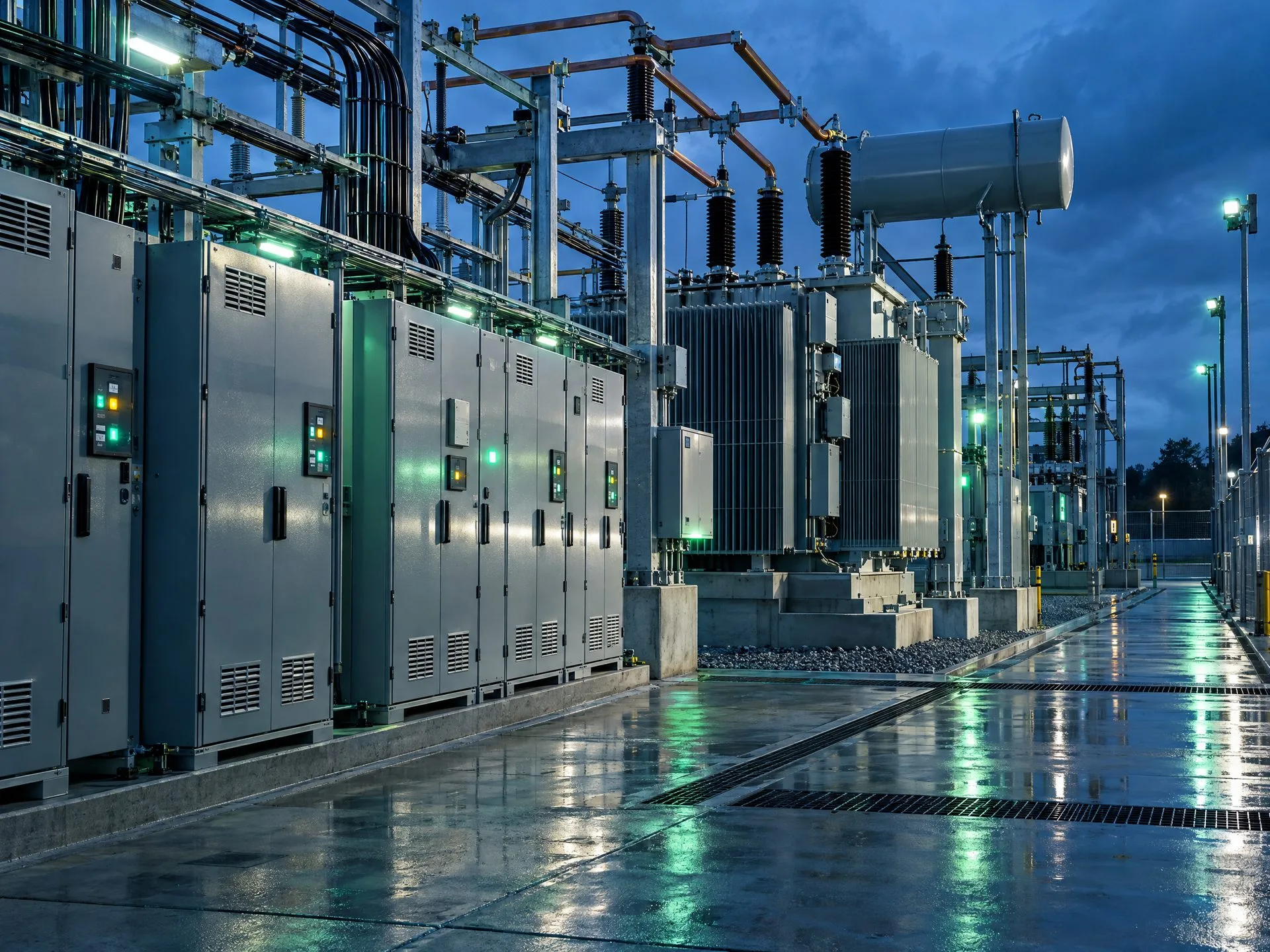
The board is the most-seen piece of electrical work. Per-circuit labelling, cable bend radius, power and control separated, consistent conduit colouring and maintenance slack turn documentation into daily practice.
Layout drawn before assembly
Circuit index fixed on the door
Genuine physical spare capacity
Signage and wayfinding
Exit, escape route, technical room, charging bay, electrical risk area: correct signage settles usage confusion better than any briefing. Designed together with emergency lighting and night luminance levels.
Integrated with the escape route
Photoluminescent or LED as the case requires
Autonomy time verified
Solutions built on material you already own
Before buying, I check what sits in storage, in the board, in the ceiling void or in the halted work: unjointed cable, sound breakers, luminaires with good housings, buried ducts. Reuse is a technical decision backed by a condition report, not an opportunistic saving.
Item-by-item condition report
Reuse with the standard still met
Disposal route recorded
Drawn construction details
Cable through a beam, board niche in masonry, ceiling closure with access, roof sealing around solar modules, a duct that crosses a sprinkler: a scaled detail prevents the improvised fix that appears at the moment of the drill.
Scaled drawing of the critical point
Coordinated with structure and hydraulics
Numbered details in the specification
Drawn detail, not improvised one
How the solution is born
Constraint is where the design starts, not where it ends
Low ceiling height, a beam that cannot be cored, a trading-hours deadline, a budget that does not close: every site has one of these. The difference between improvisation and engineering is that the second one writes the route, calculates it and tells you what happens when someone else touches it later.
I start from the intended use, never from the desired equipment
I map what exists: board, circuits, cable, structure, ceiling void and stock
I generate three routes, including the cheapest and the most conservative
I cross every route with the standard, with cash and with maintenance
I draw the critical detail to scale and test the solution before deciding
How a problem with no obvious answer gets solved here
Creativity that survives the site has a script. It is not a last-minute improvisation, and it is not trial and error paid for with client material.
Eight-step script
State the objective in one sentence: what must change in how the space is used
Inventory the real constraint: structure, ceiling height, deadline, budget, local rules
Recognise what already exists: board, circuits, cable, luminaires, ducts and stock
Generate three different routes, including the most conservative and the cheapest
Calculate each route: load, voltage drop, illuminance, discrimination
Check conformity standard by standard and record the technical justification
Draw the critical detail to scale and test the solution before closing
Document it in the specification and the ART so another professional can continue
Improvisation is not creativity
A jury-rig has another name: risk without calculation. A genuinely creative solution is reversible, documented and auditable — it passes the fire brigade inspection, the insurer report and the hands of a maintenance electrician who has never met me. If an idea needs someone to squint at the standard, it does not enter the design.
We needed product highlight without touching the ceiling finish or the sprinklers. What came back was a drawn detail, with a luminaire and position that fitted our budget. The store opened on schedule.
Facilities managerRetail chain · Shopping centre, São Paulo/SP
Our board had no room for vehicle charging. The answer was load management and a dedicated circuit reusing existing ducts, not the demolition job we had been quoted.
Building managerCondominium with shared garage · Niterói/RJ
Illustrative testimonials: they represent the kind of feedback received, without identifying real clients. Replace them with yours in conteúdo/criatividade.
Bring the hard problem
Describe the constraint, send the photos, get three routes
I do not need the solution ready: I need the objective, the constraint and photos of the place. With that I return the viable routes with approximate cost, timeline and the technical justification for each — including when the honest answer is that this one cannot be improvised.
Does a creative solution mean bypassing the standard?
No, and that is the boundary of the service. An off-catalogue solution is acceptable when the required performance is reached another way and that is demonstrated: calculation, normative reference and construction detail. What never happens here is a silent workaround of NBR 5410, of an escape route or of residual current protection.
What does the extra drawn detail cost?
Within a full design, construction details typically add 5% to 15% of development time. They look disproportionate only when ordered as an isolated item. On site, a single re-drilled beam or one ceiling rework usually pays that time back — before counting the improvisation it prevents on the day of the hole.
Is it worth reusing an old board and cable?
It depends on the condition report, not on the age. If insulation, continuity, breaking capacity and terminal torque comply, reuse is a technical decision that saves material, schedule and waste. If they do not, reuse is off the table: there is no saving in keeping a component with no assured behaviour, especially before adding an EV charger or a capacitor bank.
Does not automation make maintenance harder?
It does when technology is designed first and routine second. The layout I defend has few scenes, switches with obvious functions, preserved manual mode and physical identification of everything. Then an electrician from any city can serve the installation without calling the integrator and without depending on an app that changes version.
Creativity in electrical engineering is a method, not inspiration
What catches the eye in a non-standard installation is rarely the visual effect: it is the sense that someone solved, right there, a problem that looked unsolvable. That comes from a known process — list constraints instead of wishes, calculate before choosing a product, draw the critical point, and accept a reversibility test. When one of those steps is missing the result may still look good, but it becomes expensive maintenance or a non-conformity in the fire brigade report later.
Declared constraint: deadline, structure, budget and standard enter the equation from the start
Three calculated routes, including the conservative one, compared on the same criteria
Construction detail drawn to scale, with access and sealing resolved
Reversibility verified: the solution can be undone without permanent damage
Recorded in specification and ART so another professional can take over safely
When bespoke work costs less than the standard answer
In retrofit, the existing material is usually the most expensive thing to replace and the easiest thing to waste. Cable buried in a wall, ducts inside a ceiling void, a board with sound sheet metal and luminaires with good housings all come back into service after a simple check: insulation, continuity, torque and breaking capacity. In new build the saving sits elsewhere — in the hole nobody has to re-drill, the circuit that will not need new cable, and the automation scene that will not need an app to switch one light on.
Reported reuse cuts material, schedule and the waste volume leaving the site
A drawn detail prevents rework in beam, ceiling and roof
Physical circuit identification cuts future maintenance time
Simple automation reduces dependence on the integrator
Talk to the technical lead
Let us size your savings before the design is signed off
Typical reply within 4 business hours · Worldwide from Brazil