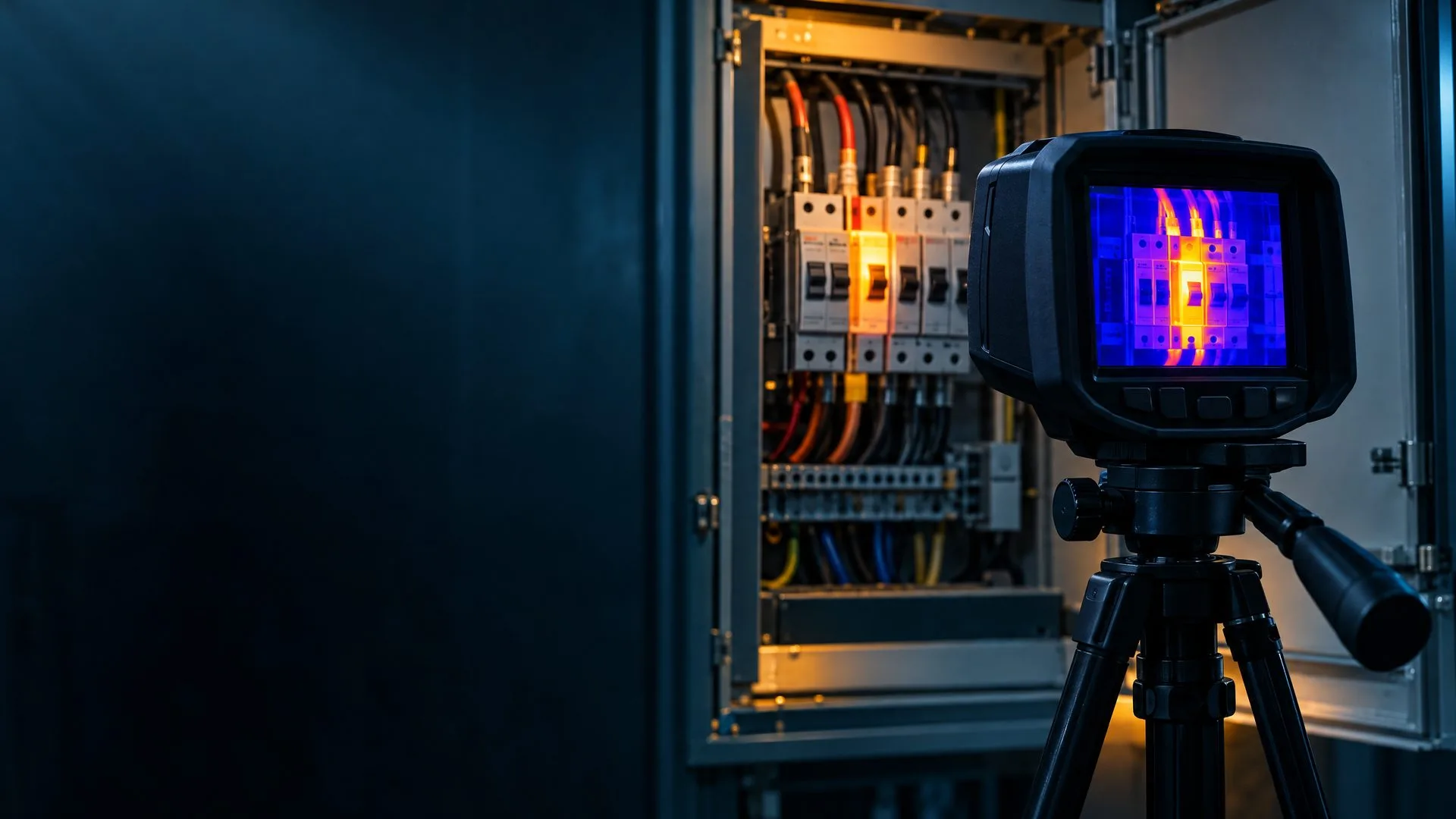
I have taken calls from clients with a photovoltaic kit in the online cart and a drawer full of charger quotes, without knowing how much current the main breaker has left. In that order the work gets paid twice: once to install, once to fix. The design is the only document that sees three things at once: the network arriving, the generation entering and the new load appearing.
Why design comes before the purchase
Kits are sold per kWp; the installation is decided by what the building already has. String size depends on the inverter voltage window. Charger power depends on spare capacity in the board and the conduit run to the bay. Module count depends on roof structure and on shading, which moves with the season. Nobody buys correctly before those are drawn.
What the utility requires
A grid-tied photovoltaic system only works after the connection request is accepted. Details shift between distributors, but the backbone is the same: site analysis, connection opinion, design with an ART record, installation as approved, inspection and metering that registers injected energy.
- Connection request with single-line diagram, power ratings and consumer unit data;
- Connection opinion — this is what says whether the local network accepts the intended power;
- Electrical design and specification with a registered ART, under NBR 16690 and the distributor requirements;
- Installation, control and protection board, circuit identification and commissioning tests;
- Inspection, bidirectional metering and the compensation rules of Law 14.300/2022.
Ignoring the connection opinion is the classic mistake: 20 kWp bought for a network that cleared 12 kW. Fixing it later means changing inverters, rebuilding strings and paying two trips to the roof.
Modules, string and inverter
Every inverter has an input voltage range, a maximum current per MPPT and a maximum open-circuit voltage. The detail that catches installers is temperature: on a cold morning open-circuit voltage rises, and a string built at the limit of a hot day wakes up outside specification. That is why I fix modules per string using the temperature coefficient, not the showroom table.
| What the design fixes | Why it cannot be left to site work |
|---|---|
| Modules per string | Cold Voc must stay below the inverter maximum voltage |
| MPPT window and operating voltage | Output falls when the string works outside the window |
| DC cable size and length | Ohmic loss in direct current is paid every single day |
| DC isolation and surge protection | Arcing and surges do not appear in the kit specification |
| DC to AC power ratio | Overbooking beyond what the maker allows voids the warranty |
| Inverter ventilation and placement | Thermal derating cuts power in the middle of the afternoon |
The control and protection board
Between inverter and main board sits the control and protection board that decides whether the system is safe or merely working: visible isolation on DC and AC side, output overcurrent protection, a residual current device matched to the leakage signature of inverter and charger, type 2 surge protectors on both sides, a busbar with real capacity and spare space. It is also where the interface with the rest of the installation is solved — and where catalogue-installed systems fall short.
If the main breaker cannot carry load plus generation plus charging, it is changed in the design, with short-circuit level and discrimination checked. A drawing decision, not improvisation at connection time.
Earthing, surges and lightning protection
New structure on a roof is extra exposed metal that has to join the equipotential bonding: module frames, mounting rails, gutters, inverter enclosure, charger body and the circuit protective conductor. Together with correctly placed surge protection, this is what limits indirect surge damage — the burnt board that shows up in warranty claims.
If the building has a lightning protection system under NBR 5419, the rule is separation distance and bonding, not improvisation: air terminals and down conductors coexist with the array through calculated clearance, and no module is fixed to a capture mast without analysis. On a metal roof, the sheet itself enters the assessment.
The EV charger: current, not marketing
Charger power is a current calculation, not a preference. The figures below are orders of magnitude on Brazilian low-voltage networks; exact current depends on local voltage and equipment.
| Charging option | Approximate current | What the installation needs |
|---|---|---|
| Mode 2 cable on a reinforced outlet | 8 A to 10 A | Dedicated circuit, rated outlet and RCD; slow, but it solves emergencies |
| Single-phase 7.4 kW wallbox | around 34 A at 220 V | Larger conductor, its own protection and an RCD matched to the unit |
| Three-phase 11 kW wallbox | around 17 A per phase at 380 V | Three-phase supply available at the board and spare module slots |
| Three-phase 22 kW wallbox | around 33 A per phase at 380 V | Main breaker, conduit and recorded demand all re-checked |
| 30 kW to 60 kW DC fast charger | set by the manufacturer | Demand study, short-circuit level, operating hours and utility sign-off |
ABNT NBR 17019 gathers the requirements for special locations supplying electric vehicles: dedicated circuit, protection, identification and, with more than one charger, load management so the total never exceeds the capacity of the installation — the scheduled charging condominiums live by. Connectors follow the IEC 62196 family, and certification requirements should be verified against the model you buy.
Contracted demand and the night peak
Panels generate by day; cars charge by night. In a group A unit, a 22 kW charger switching on with the chiller, pumps and machines can push the peak above contracted demand, and the meter remembers it for the whole month because of a few minutes. The answer is design work: start sequencing, current limiting per charger, moving process steps or renegotiating demand, chosen with the measured profile in hand.
In a condominium the design is even more collective: power per bay, balance across phases, busbar capacity, distribution riser and a cost-split rule that does not depend on neighbours agreeing. Providing infrastructure for every bay and installing only in occupied ones stops the second job costing three times the first.
What the two systems save together
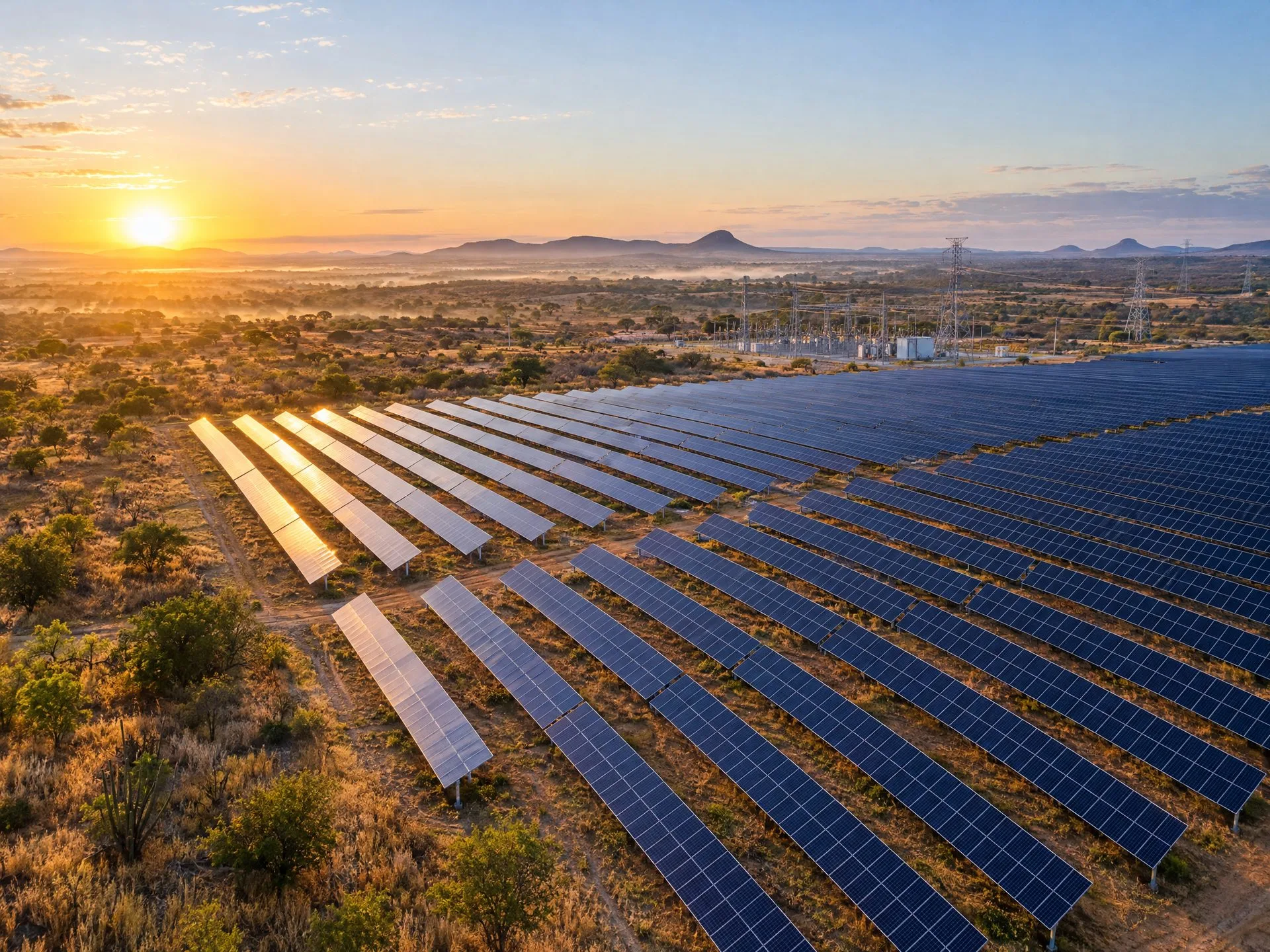
Across much of Brazil, a well-oriented kilowatt-peak without shading yields roughly 1,200 to 1,600 kWh a year, depending on region, tilt, temperature and dirty glass. With that number, the honest calculation compares annual building consumption with the generation actually possible, adds the new vehicle load and sizes for self-consumption rather than selling surplus: credits offset, but they do not repay the investment. The charger enters as added consumption — commonly a few hundred kWh a month, depending on distance and car.
Solar and vehicle charging are not two products: they are one electrical installation with three flows. Whoever draws all three pays for one job; whoever buys loose parts pays for the second.
The full scope is on the green energy page, with feasibility study and utility approval. Before closing the purchase, cross-check it with the electrical design page and, in an older building, with a technical report. The savings simulation is on the energy savings page, and the next step is the quote form.
What to take away
- The connection opinion decides how many kilowatts you may install; buying before it is a gamble.
- Size the string with cold-temperature Voc, and the inverter with real ventilation and derating.
- The control and protection board, bonding and surge protection separate a safe system from an assembled kit.
- A charger is a current calculation: 7.4 kW single-phase and 22 kW three-phase change board, conduit and demand.
- In group A, the night charging peak can breach contracted demand — load management belongs in the design.
Technical lead
Julio C. Fornazier
Leading Energia Criativa, Julio signs low and medium voltage electrical designs, technical inspection reports and energy efficiency plans for industrial, commercial, condominium and residential clients across Brazil. His method is simple: measure before specifying, simplify the circuit, cut waste and deliver the full documentation needed for utility approval, fire marshal audits and inspections.